Yu-Gi-Oh! (Japanese: 遊☆戯☆王, Hepburn: Yū-Gi-Ō!, lit. "King of Games") is a Japanese manga series about trading card gaming written and illustrated by Kazuki Takahashi. It was serialized in Shueisha's Weekly Shōnen Jump magazine between September 1996 and March 2004. The plot follows the story of a boy named Yugi Mutou, who solves the ancient Millennium Puzzle. Yugi awakens a gambling alter-ego or spirit within his body that solves his conflicts using various games.
The manga series has spawned a media franchise that includes multiple spin-off manga and anime series, a trading card game, and numerous video games. Most of these incarnations involve the fictional trading card game known as Duel Monsters, where each player uses cards to "duel" each other in a mock battle of fantasy "monsters", forming the basis for the real life Yu-Gi-Oh! Trading Card Game tie in. The manga was adapted into two anime series; the first anime adaptation was produced by Toei Animation, which aired from April to October 1998, while the second, produced by NAS and animated by Studio Gallop titled Yu-Gi-Oh! Duel Monsters, aired between April 2000 and September 2004. Yu-Gi-Oh has since become one of the highest-grossing media franchises of all time.
Yu-Gi-Oh! tells the tale of Yugi Mutou, a timid young boy who loves all sorts of games, but is often bullied around. One day, he solves an ancient puzzle known as the Millennium Puzzle (千年パズル, Sennen Pazuru), causing his body to play host to a mysterious spirit with the personality of a gambler. From that moment onwards, whenever Yugi or one of his friends is threatened by those with darkness in their hearts, this other Yugi shows himself and challenges them to dangerous Shadow Games (闇のゲーム, Yami no Gēmu, lit. "Games of Darkness") which reveal the true nature of someone's heart, the losers of these contests often being subjected to a dark punishment called a Penalty Game (罰ゲーム, Batsu Gēmu). Whether it be cards, dice, or role-playing board games, he will take on challenges from anyone, anywhere.
As the series progresses, Yugi and his friends learn that this person inside of his puzzle is actually the spirit of a nameless Pharaoh from Ancient Egyptian times, who had lost his memories. As Yugi and his companions attempt to help the Pharaoh regain his memories, they find themselves going through many trials as they wager their lives facing off against gamers that wield the mysterious Millennium Items (千年アイテム, Sennen Aitemu) and the dark power of the Shadow Games
In the trading card game, players draw cards from their respective decks and take turns playing cards onto "the field". Each player uses a deck containing forty to sixty cards, and an optional "Extra Deck" of up to fifteen cards. There is also an optional fifteen card side deck, which allows players to swap cards from their main deck and/or extra deck between games. Players are restricted to three of each card per deck and must follow the Forbidden/Limited card list, which restricts selected cards by Konami to be limited to two, one, or zero. Each player starts with 8,000 "Life Points", with the main aim of the game to use monster attacks and spells to reduce the opponent's Life Points.
From Wikipedia, the free encyclopedia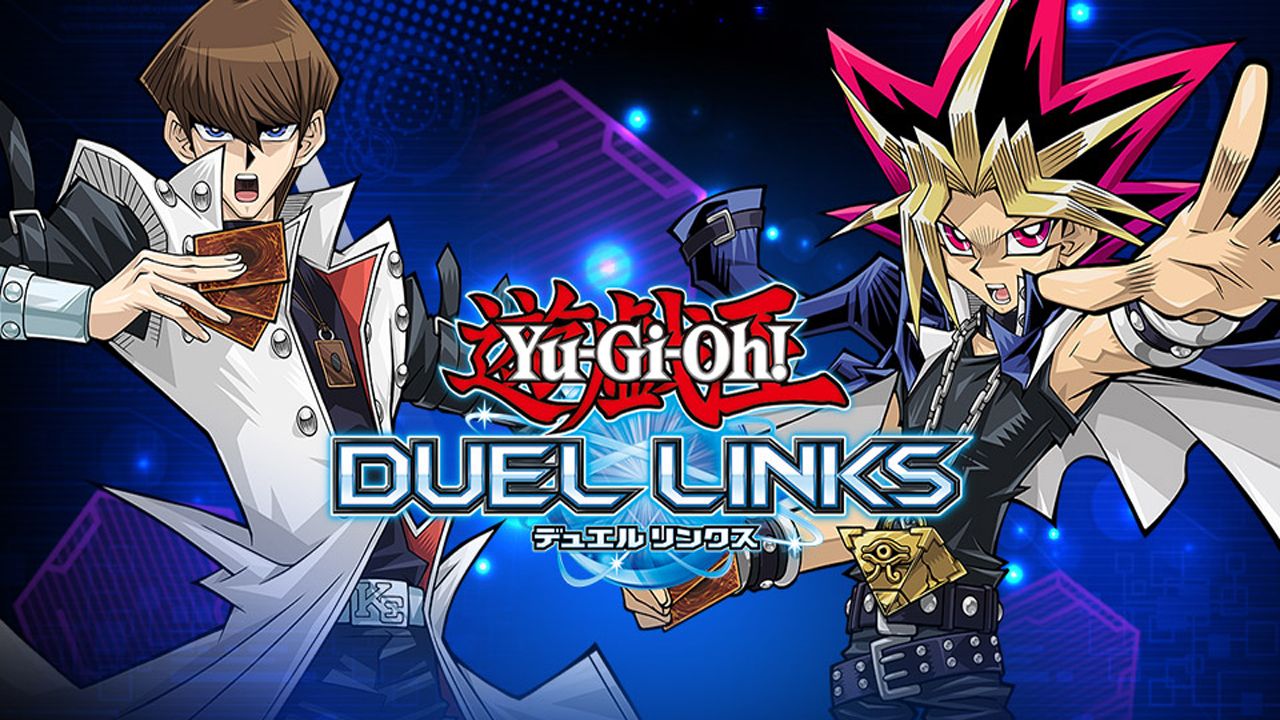
Yu-Gi-Oh! Duel Links (遊戯王 デュエルリンクス) is a free-to-play, digital collectible card game developed by Konami for the iOS, Android and Microsoft Windows platforms, based on Yu-Gi-Oh! Trading Card Game. After an initial beta period, the game was first released in Japan on November 17, 2016, and then released to the rest of the world on January 11, 2017.[1] The Windows version was released worldwide via Steam on November 17, 2017.
From Wikipedia, the free encyclopedia



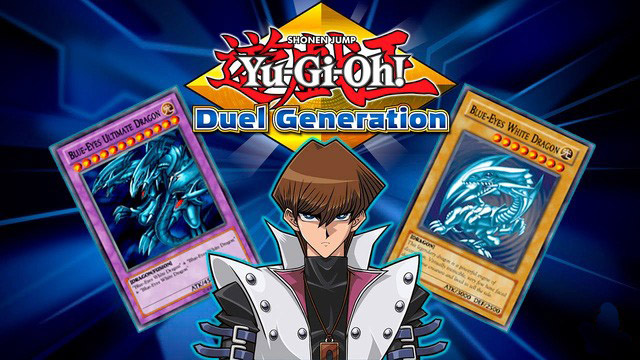
Yu-Gi-Oh! Duel Generation is a free-to-play game, playable through iPad, iPhone, Android devices or Kindle Fire.
On September 30, 2020 the servers went offline. [1] However, as long as players download the game and keep it on their mobile devices, the single player campaign will still be playable.
Sauce From Yu-Gi-Oh! Wiki - Fandom